Stop Wasting Time on Generic Training: Try These 5 Micro-Learning Hacks
- Sadie Cubitt

- Dec 16, 2025
- 6 min read
You know that sinking feeling when your team rolls their eyes at another "mandatory training session"? The truth is, most corporate training is designed to check compliance boxes rather than actually change behavior or build skills.
Here's what's really happening: your employees sit through hour-long presentations, forget 75% of the content within a week, and continue doing things exactly as they did before. Meanwhile, you've just burned through thousands of pounds and countless work hours for essentially zero return on investment.
But what if there was a smarter way? What if you could deliver training that people actually engage with: and remember?
Enter micro-learning. This isn't just another buzzword floating around HR departments. It's a research-backed approach that works with your brain's natural learning patterns instead of against them. And the results speak for themselves: 50% higher engagement rates, 3x faster development time, and 50% lower costs compared to traditional training methods.
Ready to transform how your team learns? Here are five micro-learning hacks that will revolutionize your training approach.
Hack #1: Master the 3-7 Minute Sweet Spot
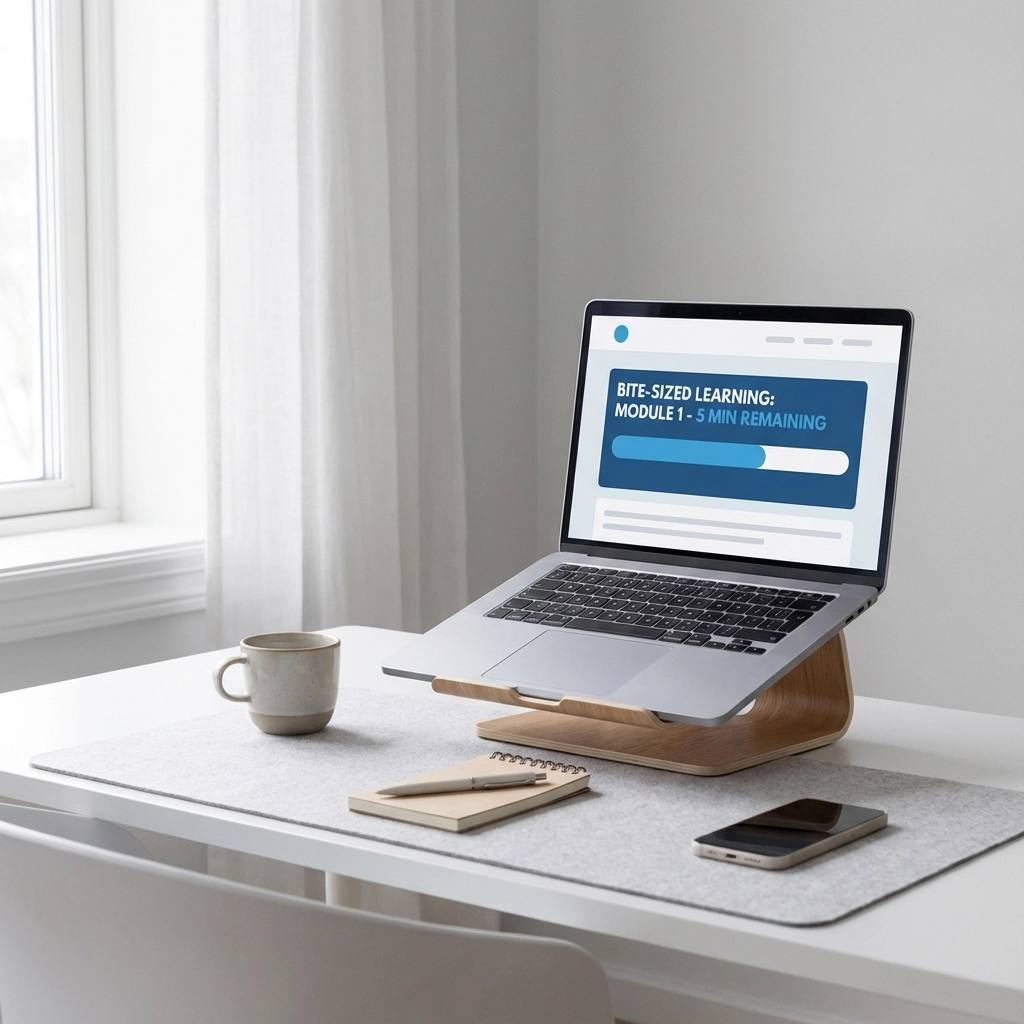
Your brain has a working memory limit: and most training completely ignores it. The truth is, cognitive overload kicks in fast when you're bombarding people with too much information at once. That's why the most effective micro-learning modules clock in at just 3-7 minutes.
This isn't about dumbing down content. It's about respecting how your brain actually processes and stores information. Think of it like this: would you rather try to drink from a fire hose or sip from a perfectly sized glass? The content amount is the same, but the delivery method determines whether you actually absorb it.
When you break complex topics into focused, bite-sized chunks, something magical happens. Instead of that glazed-over look you see in traditional training sessions, learners stay alert and engaged throughout. They can revisit specific concepts when needed, building knowledge layer by layer.
The key is teaching one concept per module. Want to train your team on customer service? Don't create a 60-minute marathon covering everything from phone etiquette to complaint handling. Instead, create separate 5-minute modules: "How to Build Rapport in the First 30 Seconds," "The 3-Step Method for Handling Difficult Questions," and "Turning Complaints into Opportunities."
Each module becomes instantly actionable, and employees can reference exactly what they need when they need it.
Hack #2: Deploy "Just-in-Time" Learning for Instant Impact
Here's a question that might sting a bit: how much of your last training investment is your team actually using in their daily work? If you're honest, probably not much. That's because traditional training often teaches skills employees won't need for months: if ever.
Just-in-time learning flips this on its head. Instead of front-loading employees with information they'll forget, you deliver targeted content exactly when they need it. This approach transforms training from a checkbox exercise into a performance support tool.
Picture this: your sales team encounters a specific objection they haven't heard before. Instead of scrambling to remember something from a training session three months ago, they can access a 4-minute module that walks them through proven response strategies. They learn it, apply it immediately, and the knowledge sticks because it solved a real problem they were facing right then.
This targeted approach doesn't just improve retention: it closes skill gaps faster and shows immediate ROI. Employees see training as helpful rather than burdensome because it directly addresses their current challenges.
The implementation is straightforward. Identify the most common problems, questions, or challenges your team faces. Create short modules that provide specific solutions. Make them searchable and accessible within your existing workflow. Suddenly, training becomes a resource people seek out rather than avoid.
Hack #3: Make It Interactive (Your Brain Will Thank You)
Let's be brutally honest: nobody enjoys sitting through slide after slide of bullet points and corporate speak. Your brain literally starts shutting down when it's not actively engaged. That's why the most effective micro-learning leverages interactive elements that keep learners mentally active throughout the process.
Interactive doesn't mean complicated. Simple quizzes, short videos, drag-and-drop exercises, and even basic scenarios can transform passive content consumption into active learning. When learners have to think, respond, and engage rather than just absorb, retention rates skyrocket.
The beauty of interactive micro-learning is that it provides immediate feedback. Got a question wrong? You learn the correct approach right away. Nailed a challenging scenario? That success reinforces the learning and builds confidence.
Consider gamified elements too. Progress bars, points, badges, and leaderboards tap into our natural competitive instincts and desire for achievement. These aren't just flashy add-ons: they create psychological momentum that keeps people coming back to complete their learning journey.
Here's a practical example: instead of a dry module on data protection policies, create an interactive scenario where learners face realistic situations and choose how they'd respond. "A colleague asks to borrow your login details to access a file. What do you do?" Multiple choice options lead to different outcomes, showing the real-world impact of their decisions.
Hack #4: Go Mobile-First for Maximum Accessibility
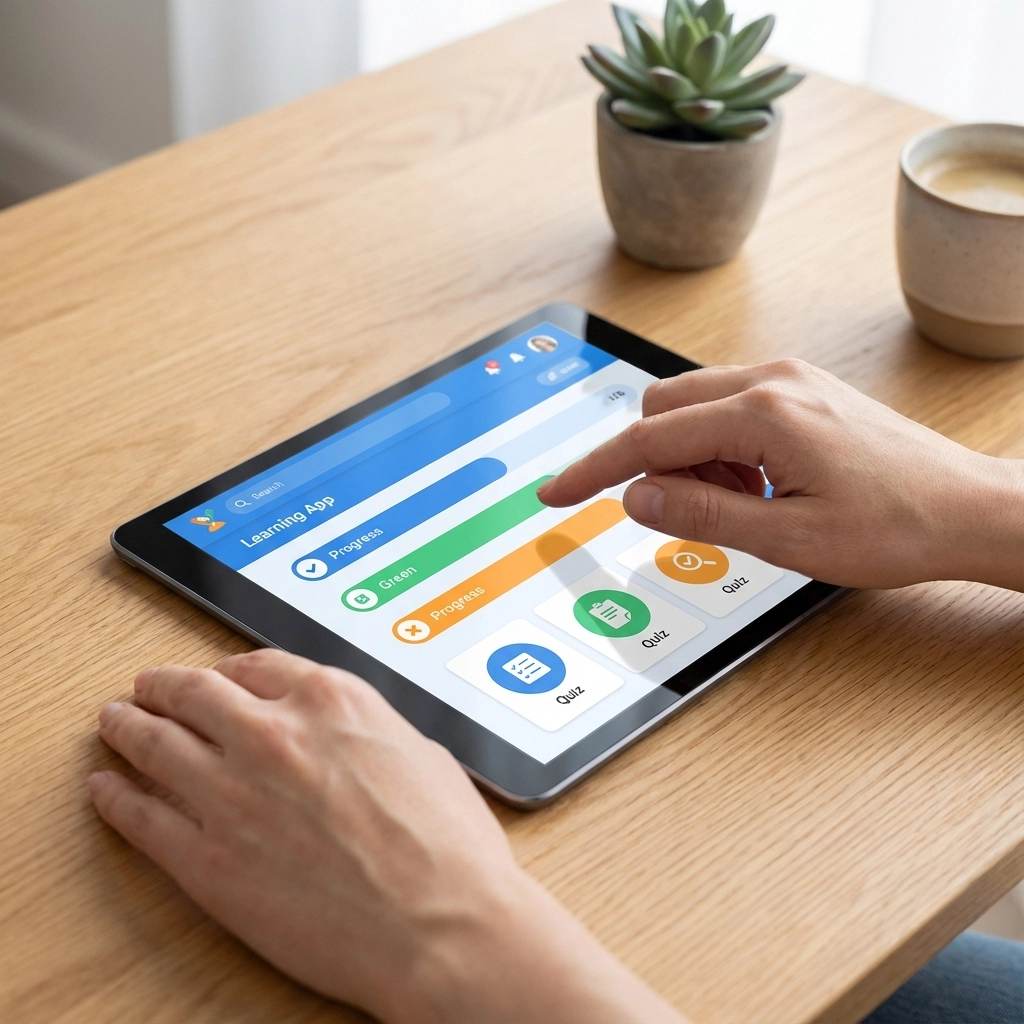
When was the last time you saw someone on a train, in a coffee shop, or waiting for an appointment without their phone? The truth is, mobile devices have become our constant companions: and smart organizations are leveraging this reality for learning.
Mobile-first micro-learning isn't just about making content that works on phones. It's about designing training that fits naturally into the rhythm of modern work life. Those 10 minutes waiting for a meeting to start? Perfect for a quick skills refresher. The commute to work? Ideal for learning something new.
This accessibility removes one of the biggest barriers to training completion: finding time. When learning fits into the gaps in people's schedules rather than competing with their priorities, completion rates improve dramatically.
The key is designing for mobile from the start, not adapting desktop content later. Mobile learners want content that's visually clear, easy to navigate with thumbs, and doesn't require perfect wifi connections. They might be learning in a noisy environment, so include captions for videos and make text large enough to read comfortably.
Think about your own behavior: you probably consume more content on your phone than any other device. Your employees are no different. By making learning mobile-friendly, you're meeting people where they already are instead of asking them to come to you.
Hack #5: Build Continuous Learning with Modular Updates
Traditional training treats learning like a one-time vaccination: get the shot, you're protected forever. But in today's rapidly changing work environment, this approach creates knowledge that's outdated before the training binder gets dusty.
Micro-learning enables continuous learning through modular updates. Instead of overhauling entire training programs when something changes, you can quickly create or update specific modules. New software feature? Five-minute tutorial. Policy update? Brief explainer video. Industry best practice evolution? Focused learning nugget.
This approach is not just more responsive: it's dramatically more cost-effective. Micro-learning can be developed 3 times faster than traditional training and costs 50% less to produce. That means you can keep your training current without blowing your budget or dedicating entire teams to content creation.
The psychological impact is equally important. When employees see that training content stays relevant and current, they develop trust in the learning system. They're more likely to engage because they know the investment of their time will pay off with genuinely useful, up-to-date information.
Create a content calendar that includes regular micro-learning updates. Monthly skill spotlights, quarterly policy refreshers, seasonal safety reminders: whatever makes sense for your industry and organization. The key is consistency and relevance.

Making the Switch: Your Next Steps
The evidence is clear: micro-learning delivers better engagement, superior retention, and faster results at a fraction of the cost of traditional training. But knowing this and implementing it are two different things.
Start small. Pick one area where your current training isn't delivering the results you need. Break that content into focused, 3-7 minute modules. Make them interactive. Test them with a small group and refine based on feedback.
The truth is, your employees want to learn and grow: they just want training that respects their time and intelligence. Micro-learning does exactly that. It transforms learning from something people endure into something they actively seek out.
Your competition is probably still stuck in the old model of lengthy, generic training sessions. While they're boring their teams into compliance, you can be building a culture of continuous, engaged learning that drives real performance improvement.
The question isn't whether micro-learning works: the research has settled that. The question is: are you ready to stop wasting time on training that doesn't work and start investing in approaches that do?
Your employees' time is valuable. Their attention is precious. And their potential is unlimited when you give them the right tools to unlock it. Micro-learning isn't just a better training method( it's a competitive advantage waiting to be claimed.)


Comments